
Temperature is not a comfort setting. The temperature is chemistry moving at a different speed inside the wash.When the temperature changes the reaction rate changes. The grease behaves differently. The enzymes either perform efficiently or begin to fail. The minerals in the water shift from dissolved to solid without anyone noticing. In the UK and across large parts of the US where hard water is common the temperature choice does more than influence energy use. It directly affects detergent performance and fabric life. Hot is not always better. Cold is not always sufficient. The balance is chemical.
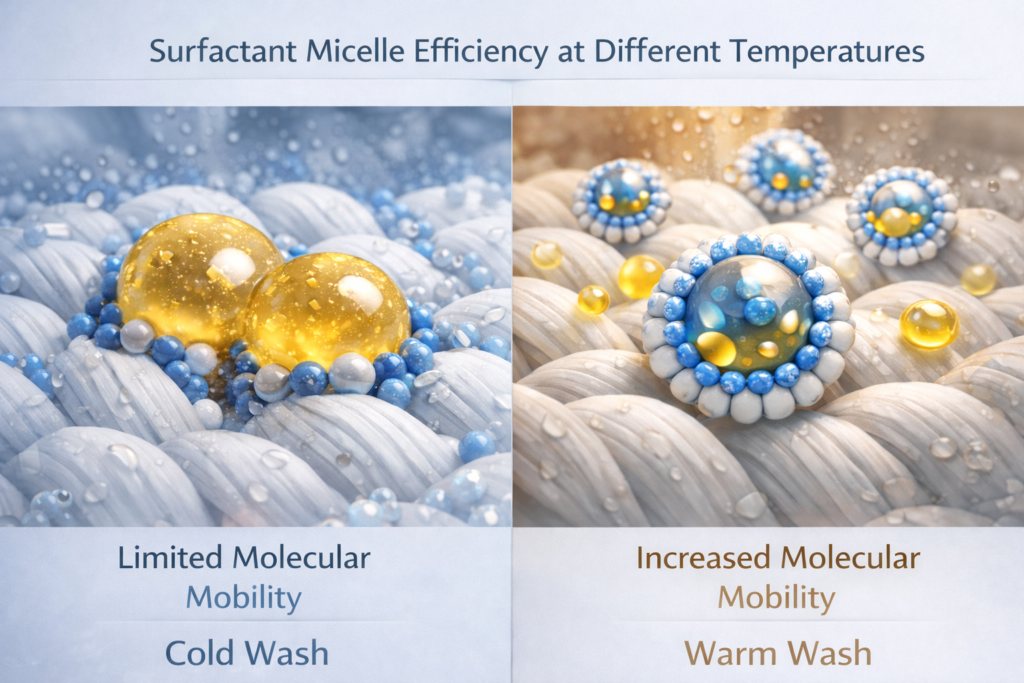
Every detergent relies on chemical reactions. Reaction speed increases as the temperature rises because molecules move faster and collide more frequently. When the temperature is low the chemistry still occurs but it proceeds slowly. That delay becomes visible when grease loads are heavy or protein soils are dense. The principle is basic reaction kinetics described in temperature effects on chemical reaction rates by the Royal Society of Chemistry. But reaction speed alone does not guarantee effective cleaning. The detergent system must still function properly.
Faster molecular motion increases the probability that detergent molecules interact with soil particles. Without sufficient collisions the soil remains attached even if the formulation is correct.
At low temperature the surface may look clean yet microscopic residues remain. The reaction was incomplete. The detergent did not fail. The chemistry was simply slowed.
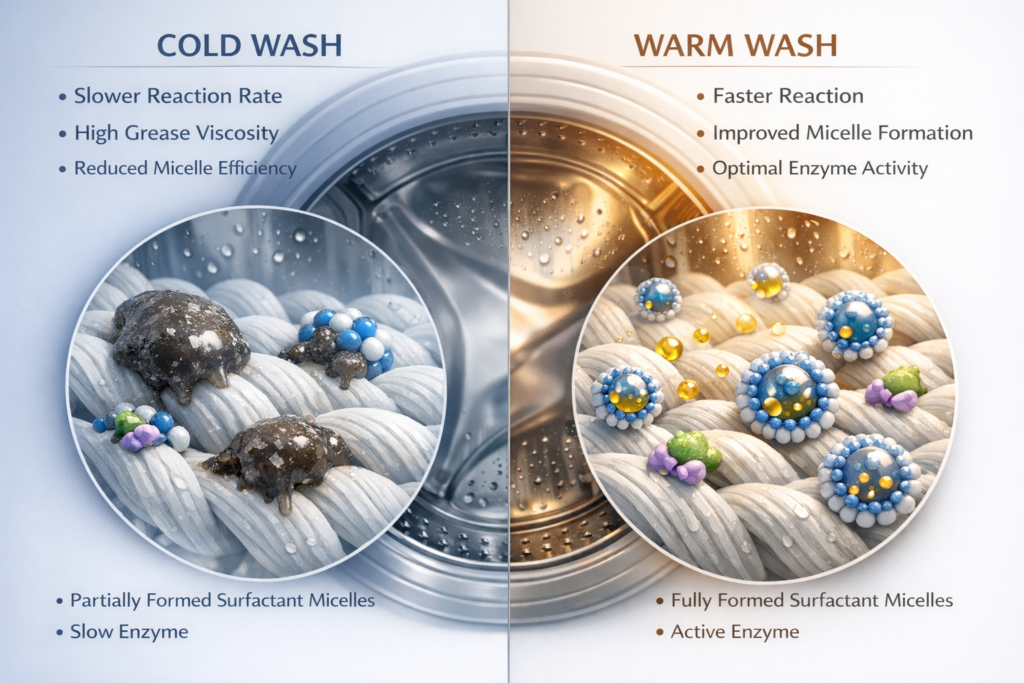
Grease in cold water is thick and resistant. Its viscosity limits surfactant penetration. When the temperature rises the grease softens. It spreads. It becomes easier for the surfactant tails to insert and form micelles around it. This directly connects to how surfactants actually work in household cleaning products because micelle formation depends on access to the oil phase.
In colder water micelles form more slowly and grease mobility is reduced. Removal efficiency declines.
In moderately warm water the detergent surrounds oil droplets more effectively leading to cleaner rinsing.
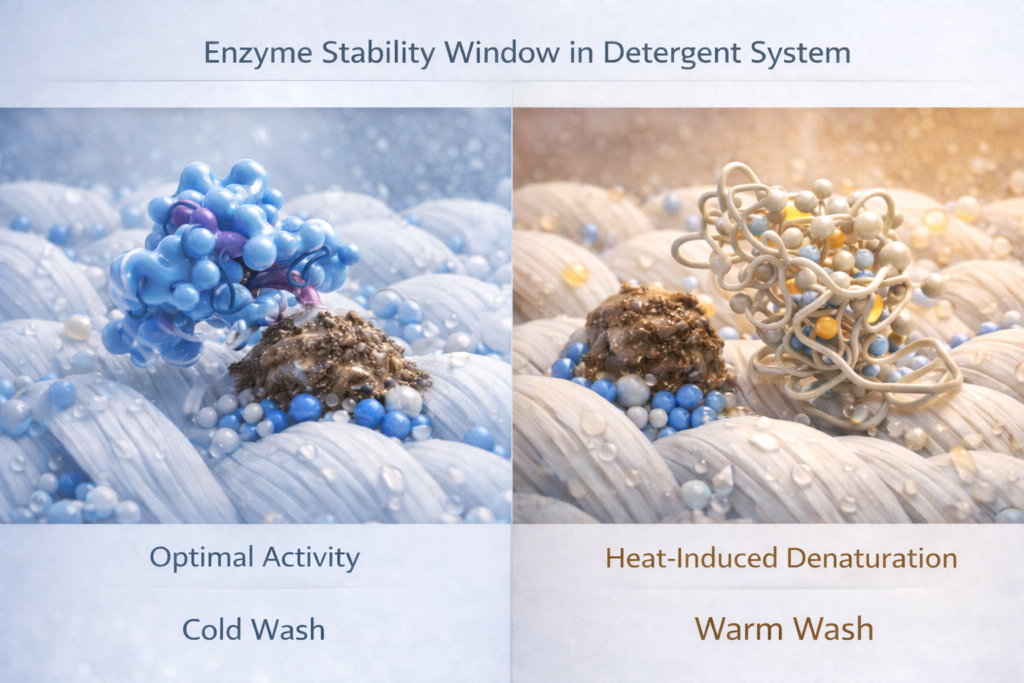
Modern detergents rely heavily on enzymes. Protease breaks protein soil. Lipase targets fat. Amylase attacks starch. Each enzyme operates within a defined temperature range. Moderate warmth increases enzyme activity. Excess heat destroys the structure. Once denatured the enzyme does not recover. This behaviour is supported by enzyme stability and temperature sensitivity research and links directly to how enzymes break down protein fat and starch based soils.
Within the correct temperature band enzymes accelerate soil breakdown efficiently.
At high temperatures the protein structure unfolds and the active site is lost. Cleaning performance drops even if the water is hotter.
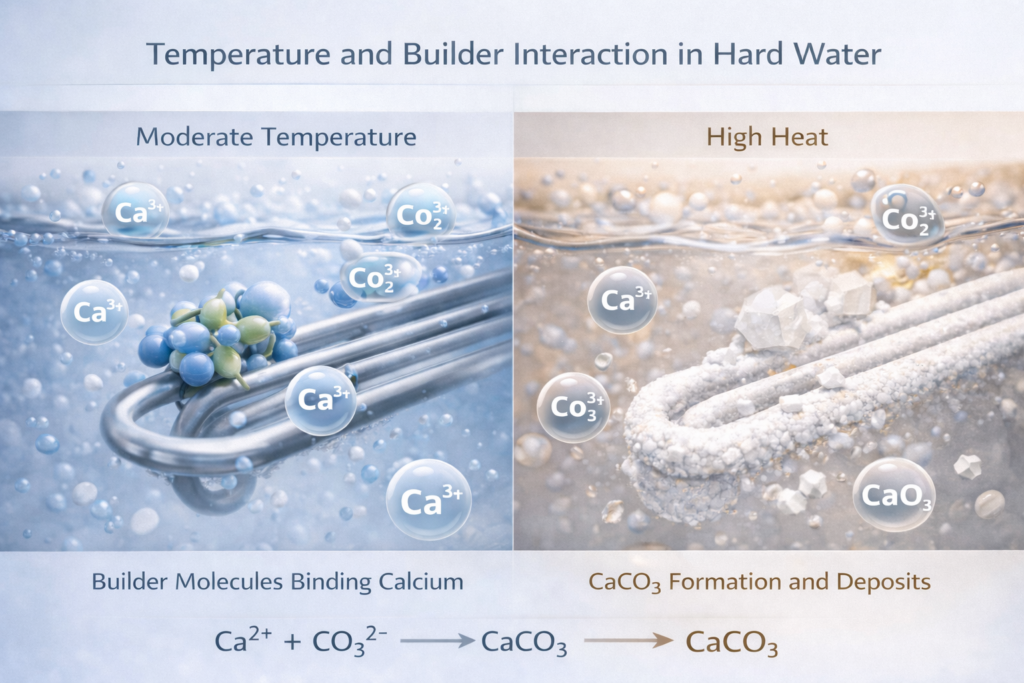

In hard water areas the detergent system must manage calcium and magnesium ions. When heated calcium bicarbonate becomes unstable and precipitates as calcium carbonate. Scale forms faster in the hot conditions. This reinforces how water hardness affects detergent performance and explains that why builders are essential in heated wash cycles. The mechanism is identical to that described in limescale formation and removal in household cleaning.
Builders bind calcium ions preventing interference with surfactants. Under excessive heat precipitation competes with sequestration.