
1. The Science of Stain
Did you ever notice that why some stains vanish off instantly while others cling with your cloths stubbornly? The answer lies within Chemistry. From food spills over to makeup smudges, understanding the basic chemistry behind stains can transform your approach to laundry, cleaning and personal care.
As a professional chemist and cleaning products formulator, I’ve studied in depth and also see them practically as well that how different molecules react and adhere with fabrics and other surfaces, and then how cleaning agents like laundry detergents and liquid dishwashers are formulated so that they react oppressively and break the stain-surface bonding so that all the mess clean away, and yes thanks to our universal solvent water, due to the presence of this universal solvent presence all this reaction of cleaning complete, and thus this mess gone away.
This blog will explore the science behind stain removed
It educate my audience regarding this cleaning processes and highlight eco-friendly solutions, and provide practical and chemist tested tips to tackle with common household stains in the UK and USA.
2. Understanding Stains: Types and Chemistry
So, stains are not equal in terms of their chemistry. Thus, specific technical approach to be made to get rid of each type of stain as stated below happily without being distorted your parent surface I-e; Fabric or dishes.
(i). Protein Based Stains
Examples: Blood, milk and eggs etc.
Chemistry: Proteins in stains denature and coagulate, forming strong bonds with fabric fibers.
Solutions: Enzyme-based detergents like proteases break peptide bonds, loosening the stain for washing purposes. These are eco-friendly solutions as well.
(ii). Tannin-Based Stains
These are the stains which leave a trail pungent odor or fabric hardening.
Examples: tea, red wine and coffee etc.
Chemistry: Polyphenolic compounds bind strongly to fabric and oxidize over time. As they react with atmospheric oxygen, the stain grows stronger over time.
Solution: Oxygen-based bleaches like sodium hypochlorite and bleaching soda like calcium oxychloride or some acidic solutions like citric acid can oxidize tannin, thus rendering the stain colorless.
(iii). Oil-Based Stains
These are long chain hydrocarbons (organic compounds). We mostly deal with these type of stains in our daily life.
Examples: grease, cooking oil, cosmetic oils etc.
Chemistry: Hydrophobic molecules(molecules that do not mix with water) sting along fiber with non-polar interactions.
Solutions: Surfactants (the major part of any detergent) lower the surface tension around greasy things, make bubble like surfaces and thus make them soluble in water
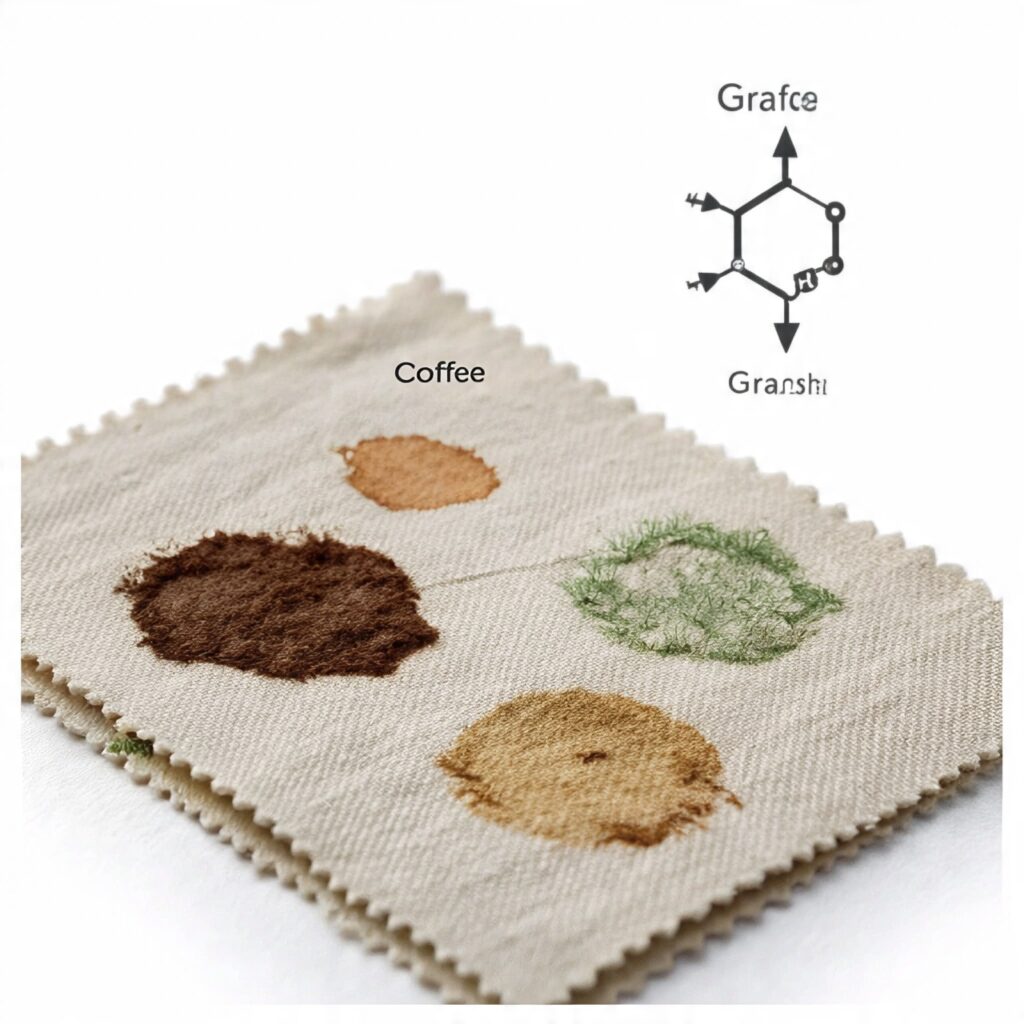
(iv). Dye Stains
These are the stains which we have to deal with on our toddlers pants.
Examples: ink, food coloring etc.
Chemistry: Covalent or ionic interactions bind dye molecules to fabric fibers.
Solutions: Oxidizing agents as stated above for tannin stains like sodium hypochlorite and calcium oxychloride are best solutions.
3- The Chemistry of Detergents
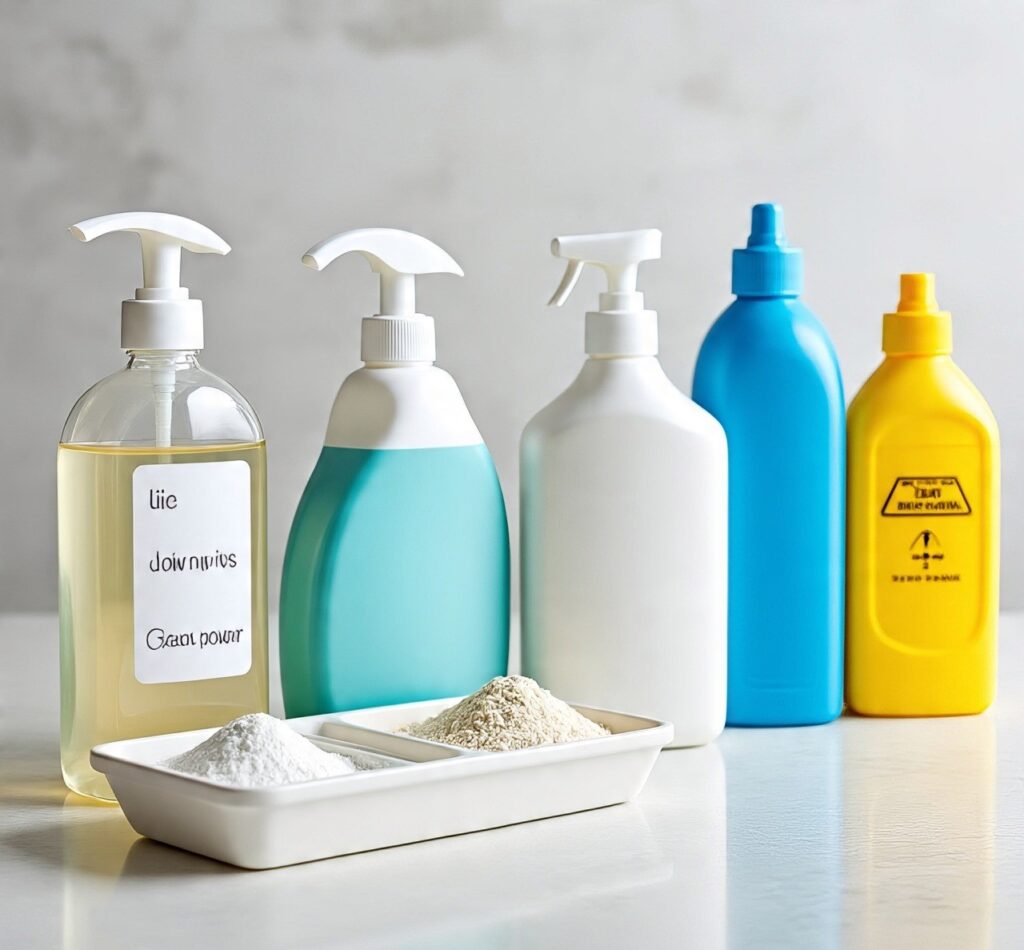
As you have studied enough basics as above that how many types of stains are there and also what is their mechanism of action on our surfaces to be cleaned. There might be a stain on fiber which might be a mixture of all type of stains as stated above. Thus detergent companies make detergents in such a competitive way that a single detergent whether it is a solid, powder or liquid detergent; it should have chemical properties such that it should remove all types of stains at once.
Thus modern detergents combine several active ingredients to tackle stains efficiently.
(i). Surfactants
These are substance which reduce surface tension to improve wetting and penetration into the stain. Examples of surfactants are LABSA (linear alkyl benzene sulphonic acid) and SLES (sodium lauryl ether sulphate).
(ii). Enzymes
These include Proteases (break protein stains), Lipases (break fats and oils) and Amylases (break starches.
(iii). Bleaches
These include chemical substances like chlorites, hypochlorite (chlorine based) and oxygen based as well which are eco-friendly.
(iv). Builders
These are chemical substances in the laundry detergents or kitchen detergents which softens the hard water while cleaning. These include phosphates, citrates and chlorides.
4- Personal Care Stains and Solutions
Here are the tricky stains. Even personal care products can leave stubborn stain marks. Examples include sweat and deodorant stains and makeup stains.
Solutions: Enzyme detergent for sweat stains while gentle surfactants remove oils. If pigment stay on, a further treatment with bleach may be necessary.
5- Step by Step Stain Removal Techniques
| Stain Type | Method |
| Protein | Cold water rinse, Enzyme Detergent Wash |
| Oil | Pre Treat with Water, Surfactant Detergent, Hot Water Wash |
| Tannin | Pre Soak in Citric Acid Solution, Oxygen Bleach Wash |
| Dye | Oxidizing Agents, Rinse, Repeat |
6- Eco-Friendly & Trending Products
You can grab further for eco-friendly laundry
Pro Tips and Chemist Hacks for Laundry and Detergents
Always have a combination treatment like surfactant+enzyme+oxygen bleach. Though many latest detergents offer all ingredients in the same detergent product.
Cold water for protein stains and warm water for oils and dyes.
Slightly alkaline soluti ons(Almost all detergents are alkaline) help remove stains more faster.
Always try to choose eco-friendly products for a safer environment and globe.
Avoid hot water on protein stains as it sets them permanently.
Written by:
Dr. Alex Grant
Content Manager and Co-Founder
Glint Corner
Dr. Alex Grant is a highly professional for cleaning chemistry and detergents. He has all his research in chemical and ingredients for cleaning and detergents. Spreading knowledge to make this planet greener and safer for all forms of life.