
Do you ever wonder why some laundry loads come out perfectly clean while others seem lackluster and overly consumed, even when using the same detergent? The secret isn’t any kind of magic but it’s science, chemistry and precise measurement. Determining the correct amount of detergent per load is a mix of chemistry, physics and practical laundry mathematics.
This guide dives deep into the chemical science behind detergents; the factors affecting dosage and how to calculate the optimal amount per load. By understanding these principles, households in the UK and USA can save money, protect fabrics and reduce environmental impact all at once, while achieving superior cleaning results.
Why Detergent Amount Matters
Using too much or too little detergent is not just a minor inconvenience; it affects the below parameters in the cleaning process:
Cleaning Performance
⦁ Too little detergent: insufficient surfactants to remove stains and grease.
⦁ Too much detergent: excess suds trap dirt and prevent proper rinsing
Fabric Longevity
Overdosing can leave residues that weaken fibers over time.
Environmental Impact
Excess detergent increases water pollution and contributes to chemical load in wastewater.
Economic Efficiency
Optimal dosing saves money and reduces waste. The right amount per load isn’t an arbitrary thing; it’s a calculated decision based on chemical principles and laundry conditions.
The Chemistry Behind Detergent Dosing
To understand why dosage matters, we need to explore the chemical makeup of detergents.
⦁ Surfactants – The Cleaning Molecules
Detergents rely primarily on surfactants, molecules that have a hydrophobic tail (binds to grease) and a hydrophilic head (binds to water). Surfactants reduce water’s surface tension, allowing it to penetrate fabrics and lift dirt.
⦁ Too little surfactant: Not enough molecules to surround grease and oils, resulting in incomplete cleaning.
⦁ Too much surfactant: Can create excessive foam and leave residues, especially in HE (high efficiency) washing machines.
⦁ Builders – Water Conditioners
Many powders include builders like sodium carbonate or zeolites that soften water by binding calcium and magnesium ions. Soft water allows surfactants to work effectively.
⦁ Soft water: Less builder required, so lower detergent dose is sufficient.
⦁ Hard water: More builder is needed; otherwise, soap scum and poor cleaning occur.
⦁ Enzymes – Biological Cleaning Agents
Liquid detergents often contain enzymes like proteases, lipases, and amylases to break down proteins, fats, and starches.
⦁ Proper dosing ensures enzymes are active throughout the wash.
⦁ Overuse does not increase efficiency; enzymes function optimally within a concentration range.
⦁ Bleaching Agents and Additives
Powder detergents often include oxygen-based bleaches or optical brighteners to enhance cleaning and whiteness. Correct dosing ensures chemical reactions occur efficiently, preventing fabric damage.
Calculating the Amount Per Load
Determining the optimal detergent per load requires considering multiple variables:
| Load Size (kg/lbs) | Soil Level | Water Hardness (ppm of calcium/magnesium) | Detergent Type & Concentration |
| Small load: less than 3–4 kg (6–8 lbs) | Lightly soiled: normal daily clothes | Lightly soiled: normal daily clothes | Liquid (standard): 30–45 ml per small/medium load |
| Medium load: 4–6 kg (9–13 lbs) | Moderately soiled: office wear, minor stains | Soft water: less than 60 ppm | Liquid (concentrated): 20–30 ml per small/medium load |
| Large load: 6–10 kg (14–22 lbs) | Heavily soiled: sportswear, muddy garments | Hard water: more than 120 ppm | Powder: 50–70 g per small/medium load |
The Mathematical Formula
Here’s a simple chemistry informed approach to calculate detergent per load:
D = L × S × W × C
Where:
D = detergent dose (grams or ml)
L = load weight (kg)
S = soil factor (1 for light, 1.5 for moderate, 2 for heavy)
W = water hardness factor (1 for soft, 1.2 for medium, 1.4 for hard)
C = concentration factor of detergent (grams/ml per kg of fabric, from manufacturer)
Example:
5 kg load, moderately soiled, hard water (factor 1.4), standard liquid detergent (C = 10 ml/kg)
D = 5 × 1.5 × 1.4 × 10 = 105 ml
Perfect dose: 42 ml for this load.
Detergent Dosing for Different Machine Types
High-Efficiency (HE) Washers
⦁ Require less detergent due to lower water usage.
⦁ Overdosing can cause foam buildup, poor rinsing, and residue.
Traditional Washers
⦁ Can handle normal doses.
⦁ Foam and suds less of a problem.
Pro Tip: Always follow manufacturer instructions for detergent and washing machine type.
Common Mistakes in Detergent Usage
Overdosing:
⦁ Wastes money
⦁ Pollutes wastewater
⦁ Leaves residue, causing skin irritation
Under dosing:
⦁ Poor cleaning performance
⦁ Build-up of stains and odors over time
Eco & Economic Implications
Using the correct detergent per load isn’t just about cleaning:
Economic:
Using the correct detergent per load isn’t just about cleaning:
Environmental:
⦁ Reduces phosphate and surfactant pollution in waterways.
⦁ Conserves energy when used with cold water washes.
Sustainability Trends:
⦁ Concentrated detergents and pods reduce packaging waste.
⦁ Low-dose detergents help reduce global detergent carbon footprint.
Tips for UK/USA Households
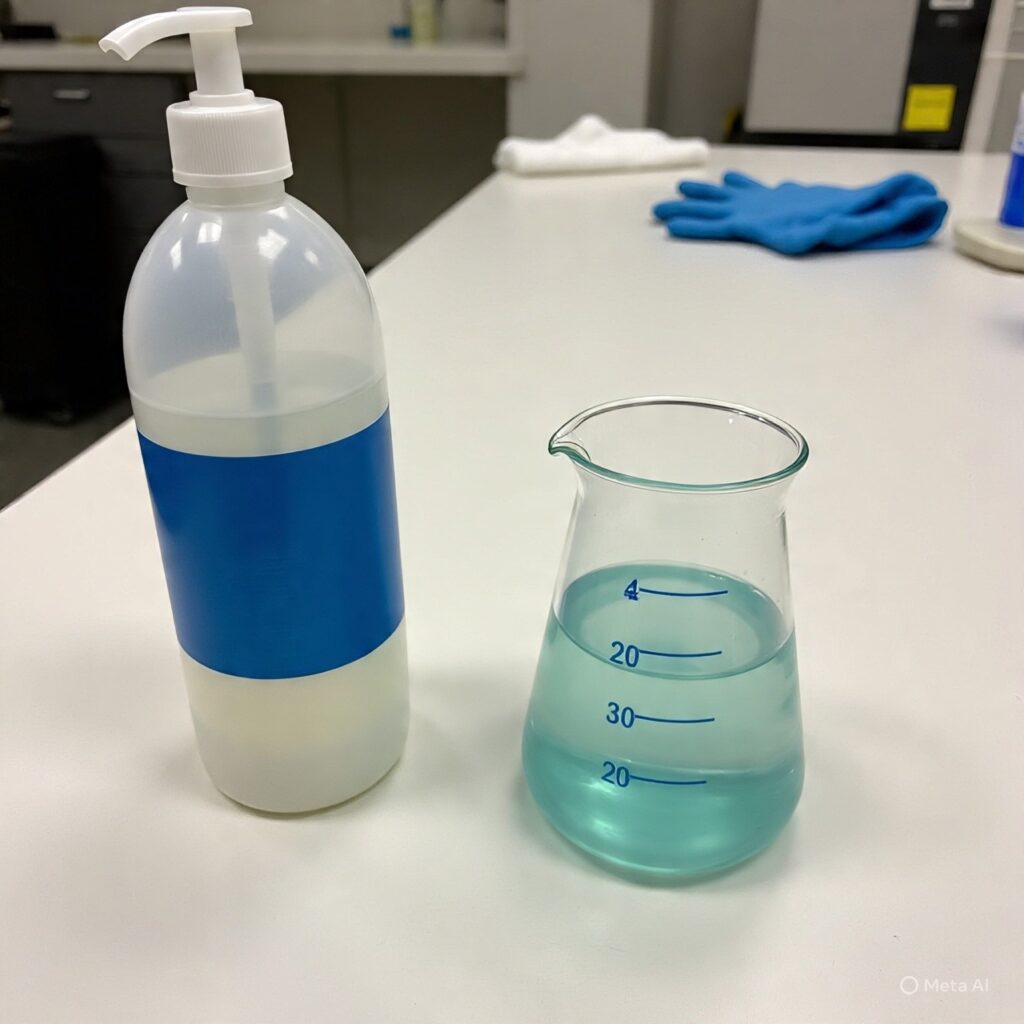
⦁ Use measuring cups or caps: Avoid guesswork; most liquids have marked caps.
⦁ Check water hardness: Especially in cities like London (hard) vs. Glasgow (soft).
⦁ Sort laundry by soil level: Tailor detergent dosage per load.
⦁ Combine with stain pre-treatment: Reduces need for extra detergent.
⦁ Eco-conscious brands: Many provide dosage guides for different conditions.
Conclusion
The amount of detergent per load is a subtle but powerful aspect of laundry science. It combines chemical principles, mathematical calculation, and practical awareness to achieve optimal cleaning. Correct dosing ensures fabrics last longer, stains disappear effectively, and environmental impact is minimized. In short, I think of laundry as applied chemistry with measurable mathematics then your clothes, wallet, and planet will thank you.
Written by:
Dr. Alex Grant
Content Manager and Co-Founder
Glint Corner
Dr. Alex Grant is a highly professional for cleaning chemistry and detergents. He has all his research in chemical and ingredients for cleaning and detergents. Spreading knowledge to make this planet greener and safer for all forms of life.